No Life on this Planet Without PHB
Seebach, 2023
Microbial PolyHydroxyAlkanoate (PHA) Biopolymers – intrinsically Natural
Mukherjee & Koller, 2023
GHG emissions reduction through PHA
GO!PHA, 2019
Preventing pollution with PHAs: denitrification
GO!PHA, 2020
Waste to bioplastics: How close are we to sustainable polyhydroxyalkanoates production?
K. Khatami et al., 2021
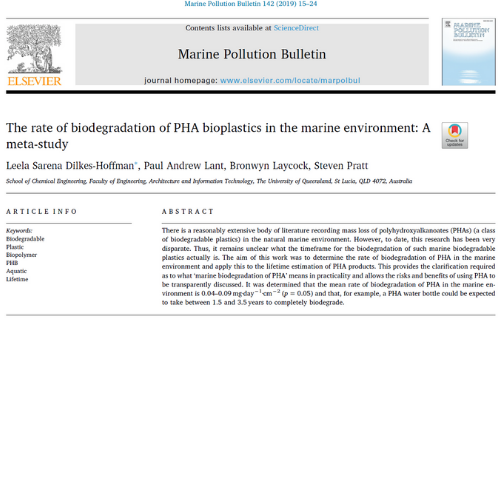
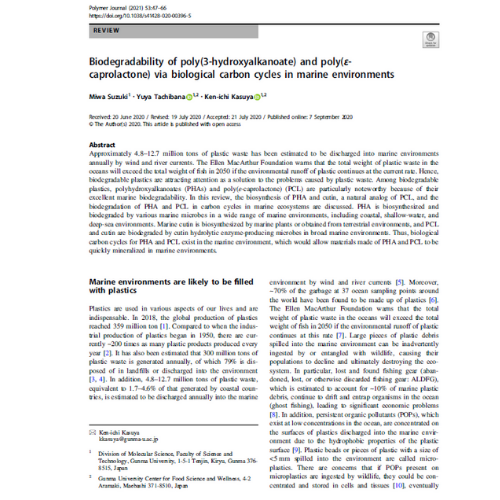
The rate of biodegradation of PHA bioplastics in the marine environment: A meta-study
L.S. Dilkes-Hoffman, et al., 2019
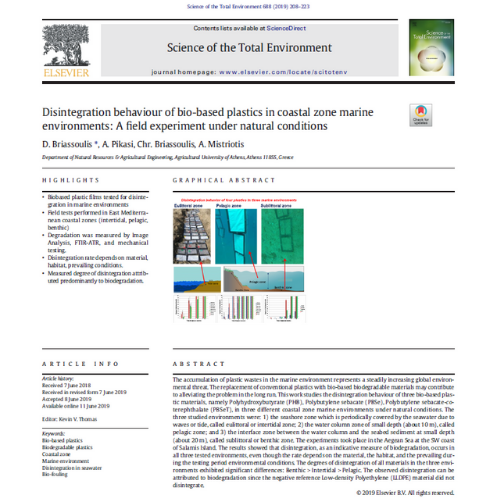
Disintegration behavior of bio-based plastics in coastal zone marine environments
D. Briassoulis et al., 2019
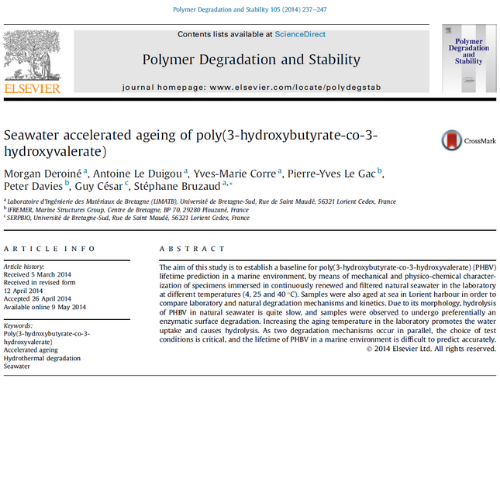
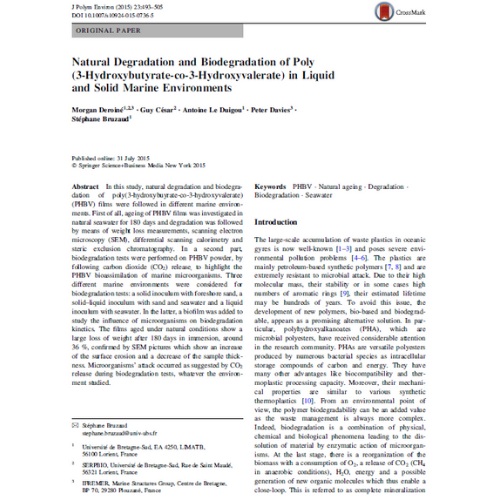
Seawater accelerated ageing of poly(3-hydroxybutyrate-co-3 hydroxyvalerate)
M. Deroiné et al., 2014
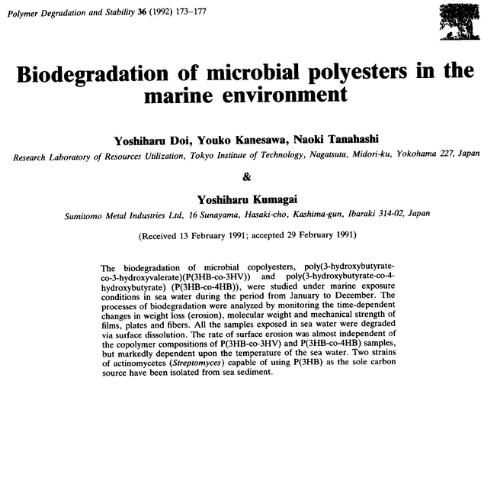
Biodegradation of microbial polyesters in the marine environment
Yoshiharu Doi et al., 1991
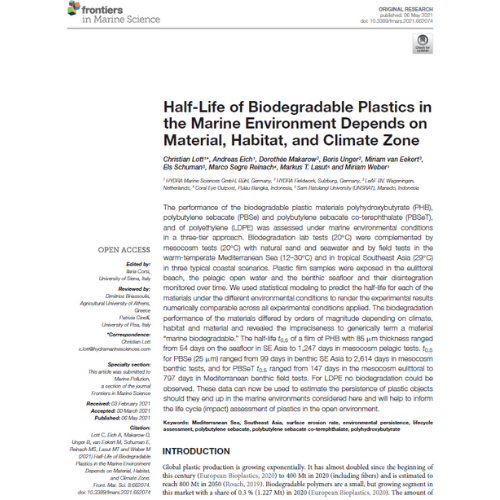
Half-Life of Biodegradable Plastics in Marine Environment Depends on Material, Habitat and Climate Zone
Christian Lott, et al., 2021
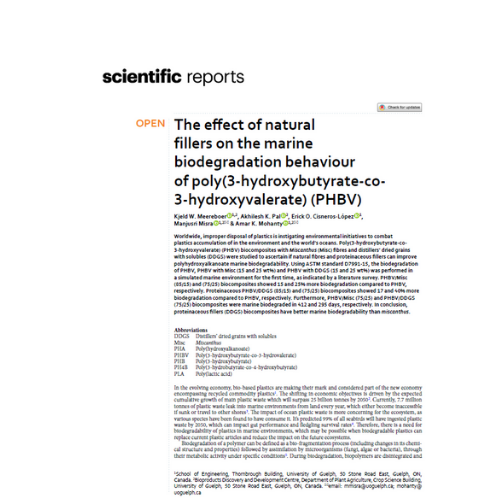
The effect of natural fillers on the marine biodegradation behaviour of poly(3‑hydroxybutyrate‑co‑ 3‑hydroxyvalerate) (PHBV)
Kjeld W. Meereboer, et al., 2021
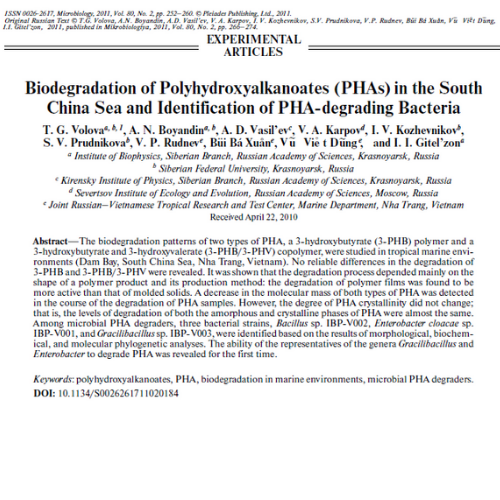
Biodegradation of Polyhydroxyalkanoates (PHAs) in the South China Sea and Identification of PHAdegrading Bacteria
VOLOVA et al., 2010
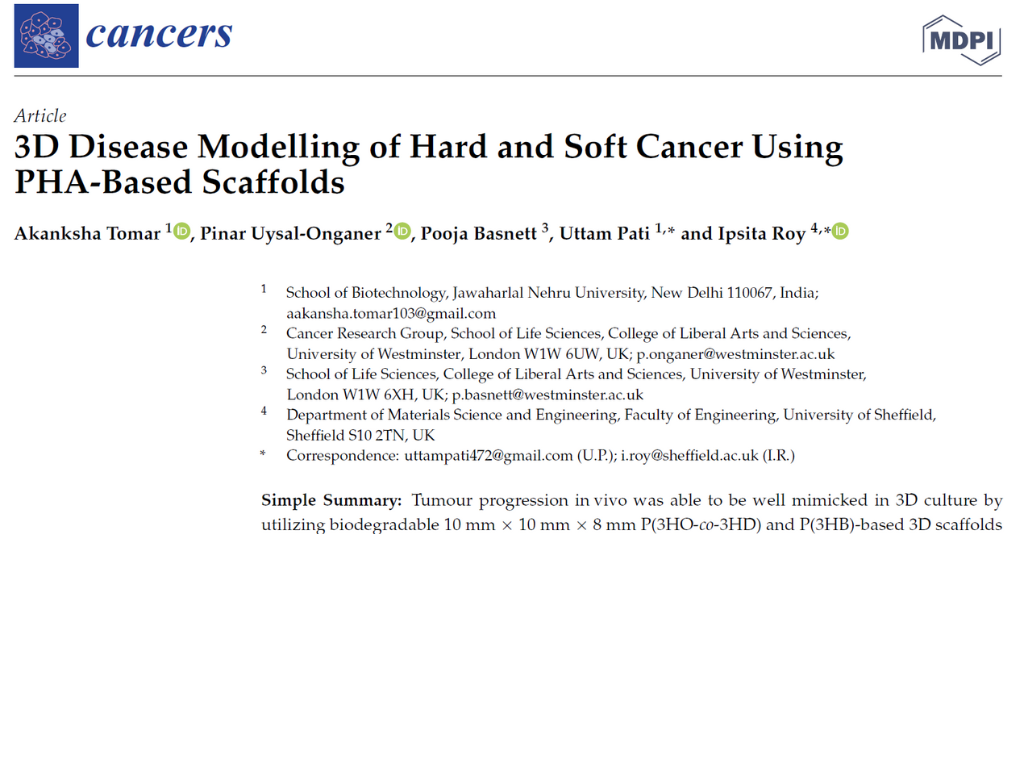
3D Disease Modelling of Hard and Soft Cancer Using PHA-Based Scaffolds
Tomar, A.; Uysal-Onganer, P.; Basnett, P.; Pati, U.; Roy, I., 2022
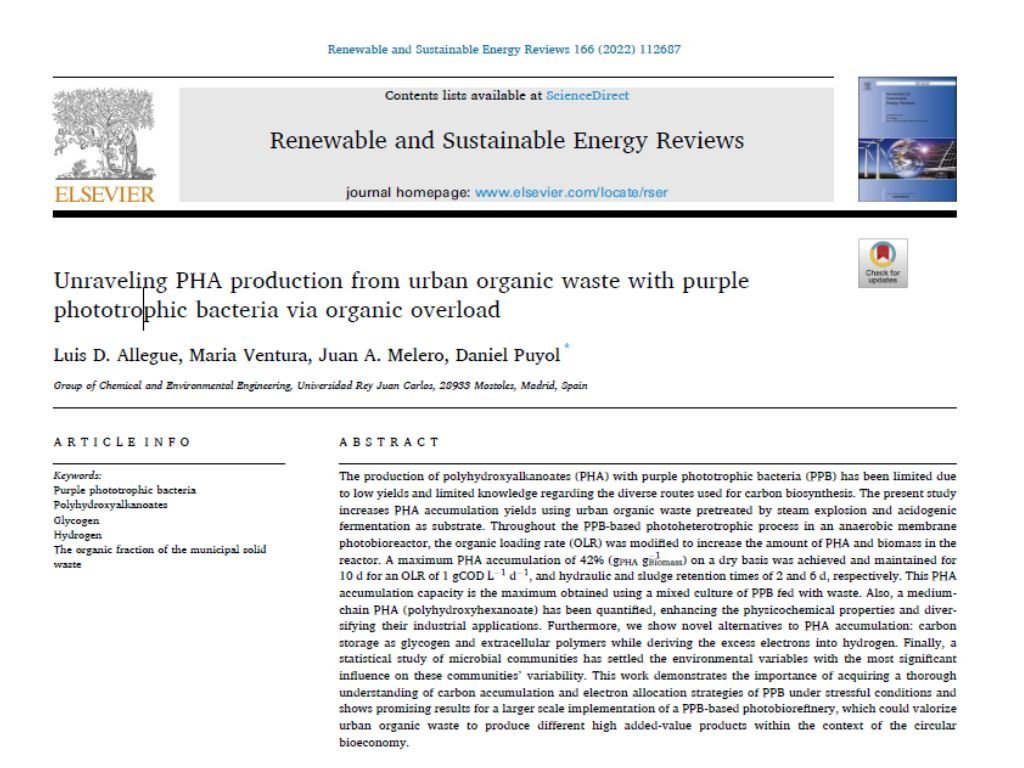
Unraveling PHA production from urban organic waste with purple phototrophic bacteria via organic overload
Luis D. Allegue, Maria Ventura, Juan A. Melero, Daniel Puyol; 2022
Can Polyhydroxyalkanoates Be Produced Efficiently From Waste Plant and Animal Oils?
Surendran A, Lakshmanan M, Chee JY, Sulaiman AM, Thuoc DV and Sudesh K; 2020
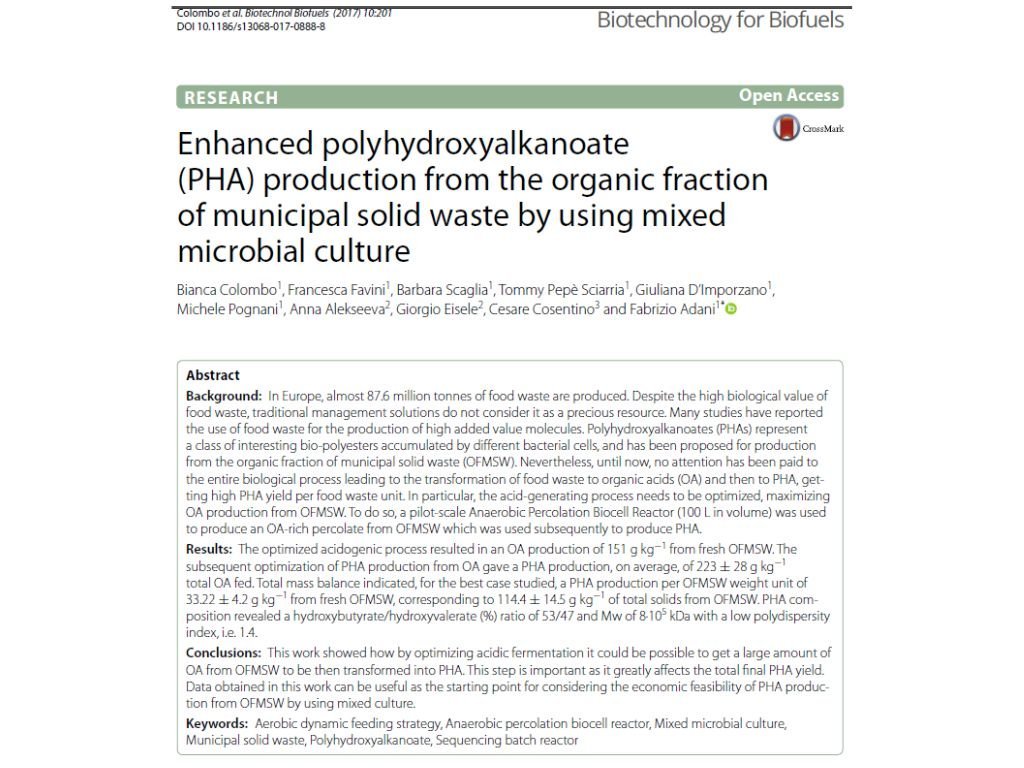
Enhanced polyhydroxyalkanoate (PHA) production from the organic fraction of municipal solid waste by using mixed microbial culture
Colombo, B., Favini, F., Scaglia, B., Pepè Sciarria, T., D’Imporzano, G., Pognani, M., Alekseeva, A., Eisele, G., Cosentino, C., and Adani, F., 2017